People living with dementia help to shape future of independent living
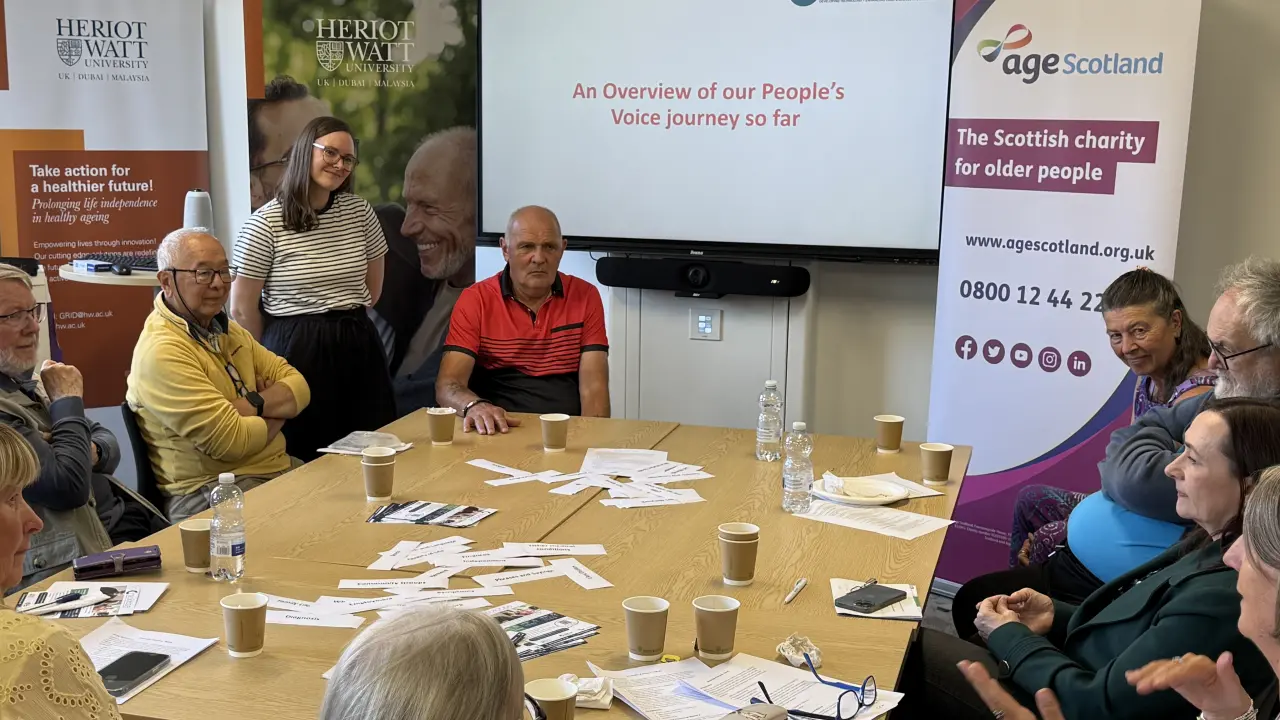
More than 300 people living with dementia, alongside paid and unpaid carers, have helped identify the priorities that should shape future support and technology designed to help people live independently for longer.
The findings come from work led by CONSOLIDATE, a national partnership involving Age Scotland, Heriot-Watt University and the University of Strathclyde, which asked people across Scotland about their experiences of living with dementia, the support they use in everyday life, and the challenges they would like future solutions to address.
People from communities across the country, from Shetland to the Scottish Borders, shared their experiences through workshops, interviews and a national survey. Their views have now been brought together in a new report, Lived Experience Shaping Priorities for Action, which will help guide future research and innovation aimed at supporting people with dementia to maintain their independence.
The engagement work identified five key priorities for action, “Grand Challenges”:
- Independence at home, including support for daily routines, safety and autonomy
- Mobility, travel and getting out, recognising the importance of safe and confident mobility and access to community life
- Dementia-inclusive technology, designed to be simple, stable, intuitive and trusted
- Social connection and reducing isolation, supporting people to maintain relationships, belonging and identity
- Supporting carers sustainably, including reducing the emotional, physical, financial and cognitive load experienced by carers
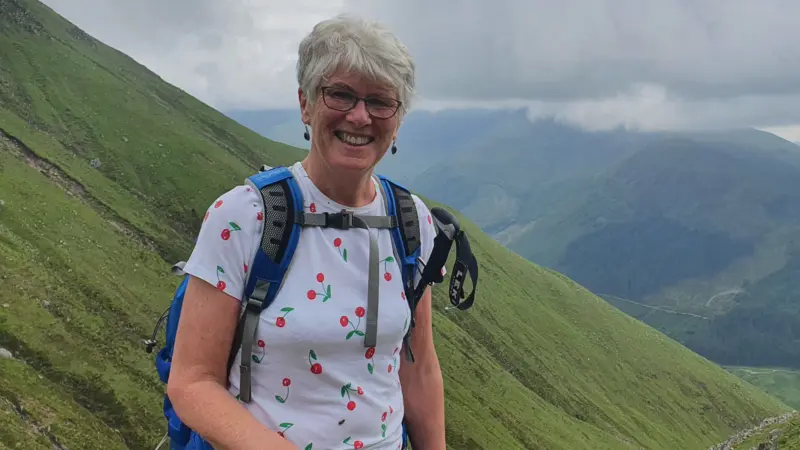
The report and findings of the engagement were launched during a special webinar hosted by CONSOLIDATE Network Manager Dr Nikita Daga and Rachel McLauchlan from Age Scotland, alongside Karen Taylor, a member of the network's lived experience panel.
Katherine Crawford, Age Scotland's chief executive, said:
"Too often, services, support and technology are designed for older people rather than with them. What makes this work so important is that people living with dementia and their carers have been involved from the start in shaping what really matters to them.
"The people who took part were clear that technology can play an important role in helping people maintain their independence, continue living well and stay connected to the people and communities that matter most to them. They also highlighted where current approaches fall short and where future innovation could make a real difference.
"By listening to the experiences of more than 300 people affected by dementia, we have gained a rich understanding of where people see technology supporting everyday life, from remaining safe and independent at home to reducing isolation and supporting carers.
"We are proud to be part of CONSOLIDATE and to help ensure that the voices of people living with dementia are helping to shape the research, innovation and practical solutions of the future.”
CONSOLIDATE has also opened a new funding call for feasibility studies addressing one or more the Grand Challenges.
Multidisciplinary teams bringing together researchers, industry, community and third-sector partners and people with lived experience are invited to apply for awards of between £50,000 and £100,000.
The studies should explore innovative and integrated approaches to supporting independence in people living with dementia. They may be used to investigate new ideas, generate proof-of-concept evidence or inform future development, funding and deployment.
Funding is available to applicants based at eligible UK institutions who meet Engineering and Physical Sciences Research Council eligibility requirements. Applicants must also be members of the CONSOLIDATE network.
Applications will be considered through a two-stage process, beginning with an Expression of Interest. Eligible proposals that meet the call criteria will then be invited to submit a full application.
Expressions of Interest must be submitted by 10am (UK time) on 7 September 2026. Supported studies are expected to begin in January 2027 and must be completed by 31 December 2027.
Applicants are encouraged to read the Lived experience shaping priorities for action report and the full funding call guidance before preparing their proposal.
Further information about the funding call, eligibility and application process is available on the CONSOLIDATE website. Researchers and organisations can also register to join the network.
Find out more
Questions about CONSOLIDATE or the funding call can be sent to dementia@hw.ac.uk
Find out more about CONSOLIDATE on their website
CONSOLIDATE Network Plus is led by Heriot-Watt University, the University of Strathclyde and Age Scotland. Its partners include Alzheimer Scotland, Meeting Centres Scotland, Carers Scotland, Community Renewal Trust, Edinburgh College, Life Sciences Scotland, NHS Borders, NHS Forth Valley, NHS Grampian, NHS Lothian and NHS Shetland. The network is jointly funded by Alzheimer’s Society, the Engineering and Physical Sciences Research Council, part of UK Research and Innovation, and the National Institute for Health and Care Research.